Fixture Congestion Reshapes Market Movements Across Association Football, Tennis Tours, and Basketball Seasons
Quinn Peters · Nov 17, 2026
Fixture Congestion Reshapes Market Movements Across Association Football, Tennis Tours, and Basketball Seasons
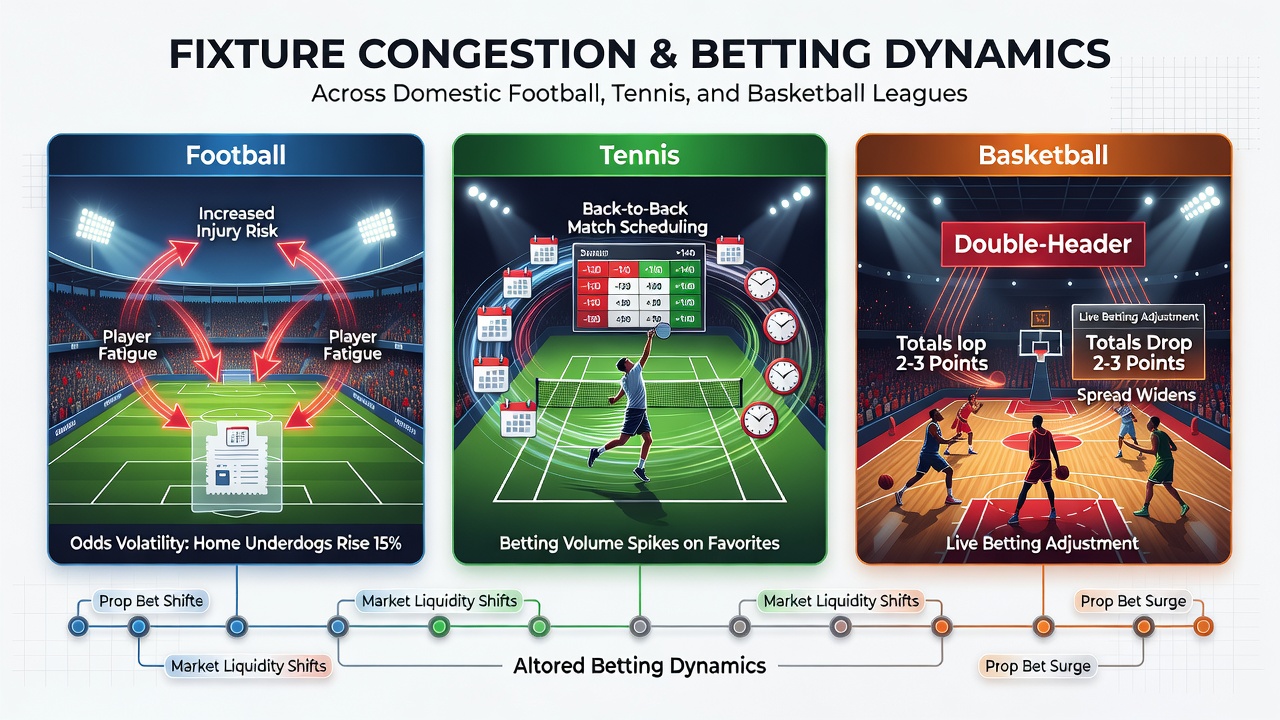
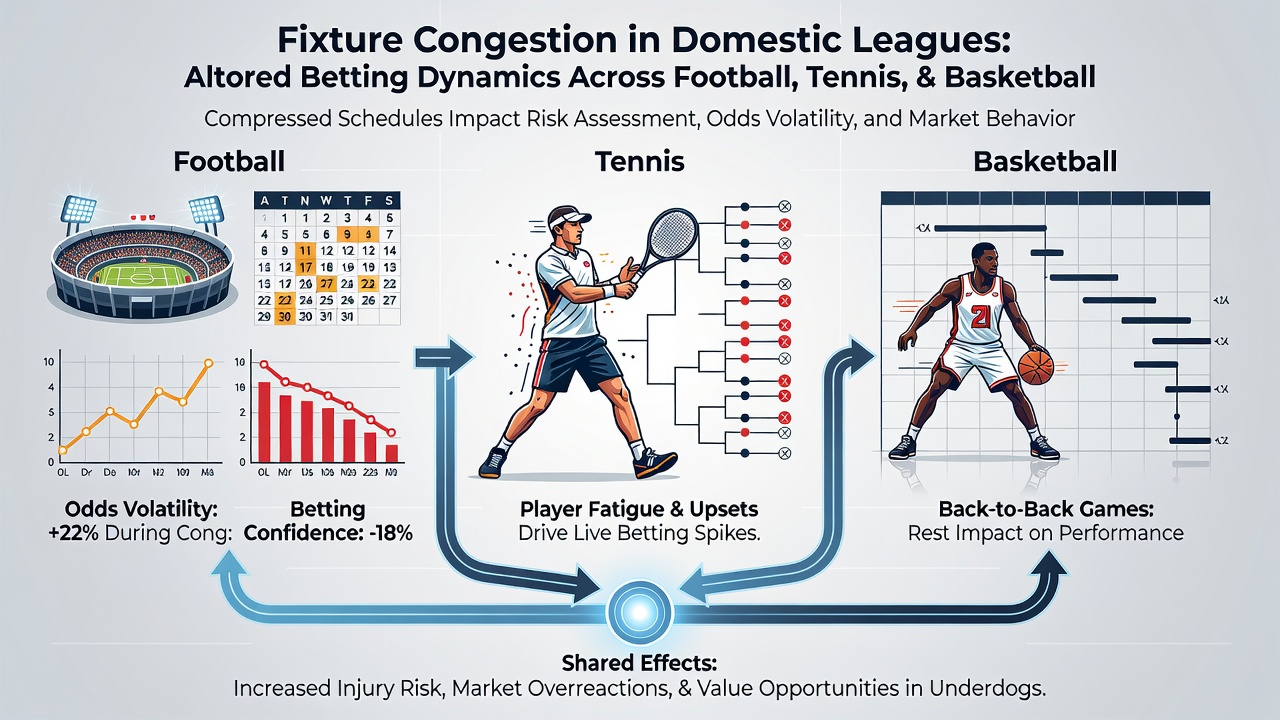
Domestic leagues across association football, tennis tours, and basketball seasons create packed calendars that force teams and players into rapid succession of matches; this pattern alters how bettors approach odds, totals, and player props. Data from major competitions shows increased rotation policies, elevated injury rates, and measurable shifts in scoring averages when rest periods shrink below standard recovery windows.
Football League Pressures and Line Adjustments
European domestic competitions such as the Premier League, La Liga, and Bundesliga schedule teams for matches every three or four days during peak winter blocks, and observers note that clubs respond with squad rotation that changes expected goal outputs and clean-sheet probabilities. Research published by sports analytics groups indicates that teams playing their third match in eight days post fewer shots on target while conceding more set-piece opportunities, which moves over/under totals downward by an average of 0.3 goals according to historical datasets. Bettors tracking these patterns adjust accumulator selections toward unders or draw outcomes when both sides appear in congested blocks, especially during November 2026 when multiple leagues overlap with European midweek fixtures.
Tennis Tour Congestion and Match Duration Markets
ATP and WTA calendars cluster high-level events in short windows, particularly during the indoor hard-court swing and year-end finals preparation, so players often contest three or four matches within five days. Performance tracking reveals that second-match win percentages drop when athletes exceed 180 minutes of court time in the prior 48 hours, prompting oddsmakers to shade moneyline prices against defending champions or top seeds in later rounds. Live betting volumes rise on over-game totals in these scenarios because fatigue tends to extend sets rather than produce quick straight-set victories, and figures from tournament organizers confirm longer average rally lengths under these conditions.
Basketball Schedule Density and Prop Bet Shifts
The NBA and major European domestic leagues pack 82-game and 34-game seasons respectively into compressed periods that include back-to-back and three-in-five stretches; league tracking data demonstrates that teams on the second night of back-to-backs allow 4.2 more points per 100 possessions while their own offensive efficiency declines. This pattern directly influences player prop markets where minutes restrictions and reduced usage rates become common, moving betting lines on rebounds, assists, and points for star players who receive rest. Accumulator builders therefore favor team totals under the posted number or opposing defenses that face tired lineups, and November 2026 examples show sharp money moving early on unders when schedules list four games in six nights for both participants.
Cross-Sport Accumulator Adjustments
Betting platforms report higher volumes on multi-leg wagers that combine selections from all three sports when fixture lists reveal overlapping congestion peaks, and syndicates exploit the correlation by pairing football unders with basketball unders and tennis over-games. Industry reports from the European Gaming and Betting Association highlight that these combinations reduce variance compared with single-sport accumulators because the fatigue effects operate independently across different physical demands. Yet the same data shows that sharp bettors still monitor travel distances and time-zone changes that compound recovery issues in basketball and tennis more than in football.
November 2026 Scheduling Overlap Patterns
During November 2026, football leagues enter their most compressed phase while the ATP Finals and NBA early-season back-to-backs coincide, creating simultaneous betting windows where line movement accelerates once starting lineups are announced. Observers tracking these overlaps note that bookmakers widen margins on player props in basketball and extend tennis set totals more aggressively than during lighter periods, reflecting updated models that incorporate recent performance decay curves. Government sports data agencies in Australia and Canada have published parallel findings that link shorter rest intervals to statistically significant drops in high-intensity actions across all three sports.
Conclusion
Fixture congestion continues to drive measurable changes in how markets price outcomes, totals, and individual performances across football, tennis, and basketball. Bettors who incorporate rest metrics, rotation likelihoods, and historical scoring adjustments gain edges that standard form guides overlook, while operators refine models to account for the recurring calendar pressure that peaks multiple times each season.