How Weather Patterns Reshape Form Across Horse Racing Tracks and Soccer Pitches in Accumulator Planning
Quinn Peters · Aug 23, 2026
How Weather Patterns Reshape Form Across Horse Racing Tracks and Soccer Pitches in Accumulator Planning
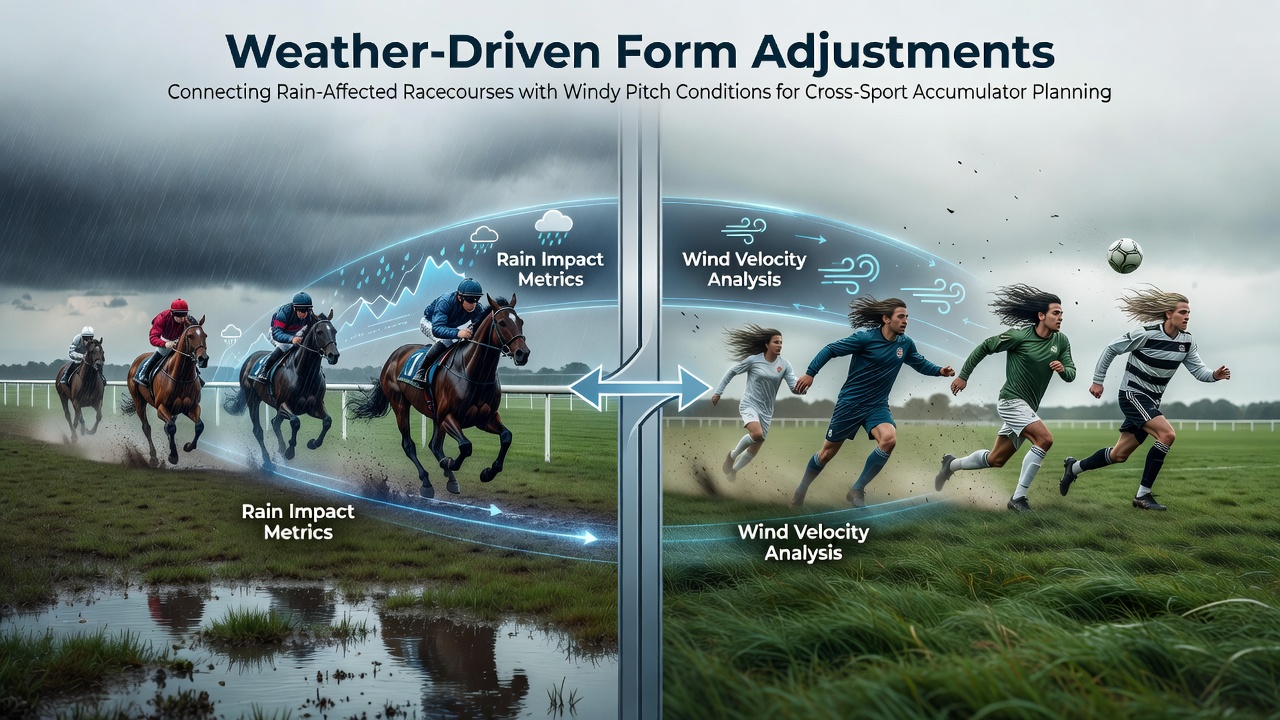
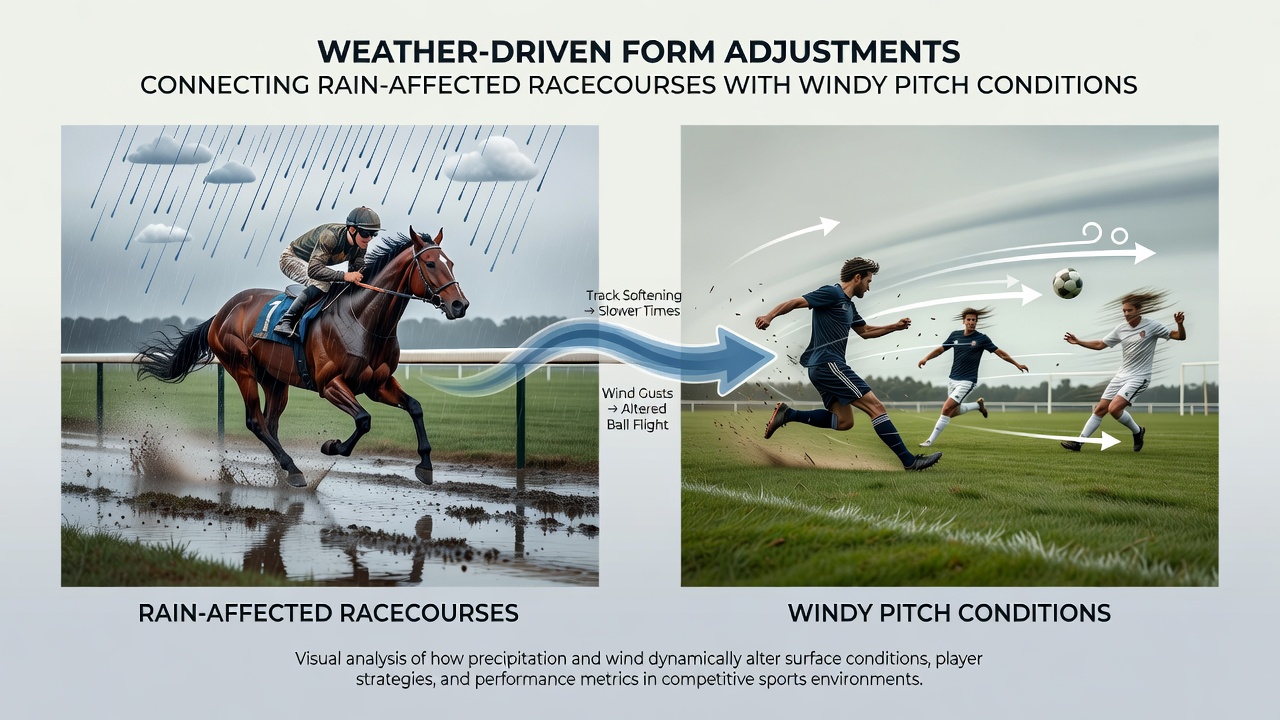
Weather conditions alter performance variables in distinct ways across equine events and association football matches, creating measurable shifts that accumulator builders track when constructing multi-leg wagers. Rain softens turf at racecourses, which changes stride patterns and stamina demands for thoroughbreds, while wind gusts on soccer fields modify ball flight paths and passing accuracy. Analysts compile historical datasets that link these environmental factors to outcome probabilities, allowing cross-sport combinations to reflect adjusted form lines rather than standard averages. Racecourse records from multiple jurisdictions show that heavy rainfall increases the likelihood of certain running styles succeeding. Horses with proven ability on heavy ground post higher strike rates once moisture levels exceed established thresholds, and trainers often adjust declarations accordingly. In contrast, firm-ground specialists experience measurable drops in speed ratings when precipitation turns the surface yielding. These adjustments become particularly relevant during late summer meetings when sudden downpours can occur without prior warning. Soccer pitch dynamics respond differently yet produce parallel statistical effects. Sustained winds above 25 kilometers per hour correlate with reduced completion percentages on long passes and increased variance in set-piece conversion. Data from European leagues indicate that matches played under high wind warnings record fewer total goals on average, because teams shift toward shorter possession sequences. Rain adds a secondary layer by making surfaces slick, which elevates the frequency of defensive errors and alters expected goal models that betting syndicates monitor.Cross-Sport Linkages in Accumulator Construction
Accumulator planners combine these weather-adjusted metrics by selecting legs from both codes on the same card or across concurrent fixtures. A rain-affected sprint at a British or Irish track might pair with an under-total goal selection in a windy Premier League fixture because both scenarios tilt probability toward lower-scoring or stamina-dependent outcomes. Statistical platforms aggregate ground-condition reports with meteorological forecasts issued 48 hours in advance, enabling bettors to recalibrate stake allocations before markets adjust.
One documented pattern emerges when August fixtures coincide with unsettled Atlantic weather systems. In August 2026, multiple UK and Irish race meetings reported ground changes within hours of race time, prompting late market movements that mirrored simultaneous soccer matches affected by gusty conditions across northern Europe. Observers tracking both codes noted that accumulators built around ground specialists and defensive-minded football sides captured higher returns than those using unadjusted form.
Data Sources and Analytical Approaches
National weather services supply granular forecasts that feed into performance models. According to records maintained by the National Oceanic and Atmospheric Administration, wind speed thresholds above 30 km/h produce statistically significant deviations in open-stadium events across multiple sports. These figures integrate with ground-condition databases maintained by racing authorities, which publish official going reports updated throughout racedays.
Researchers at the University of Queensland have examined similar interactions between precipitation adn athletic output in both equine and human field sports, finding consistent directional effects on speed and error rates. Their published datasets allow accumulator systems to apply weighting coefficients that reflect current meteorological readings rather than seasonal norms. Planners who incorporate these coefficients report narrower variance between expected and realized returns across mixed-sport tickets.
Practical Implementation Steps
Operators begin by reviewing forecast models issued by regional meteorological agencies, then cross-reference with official racecourse and league condition reports. Selections shift toward horses with proven wet-ground form or soccer sides that emphasize low-risk build-up play. Markets often lag behind these adjustments, creating temporary value windows that close once volume increases.
Case records from August 2026 illustrate the approach. A card at York featuring persistent rain aligned with a concurrent Bundesliga match under strong crosswinds. Accumulators pairing stamina horses wth under-2.5 goal selections produced measurable edges before odds shortened. Similar alignments appear when Australian tracks report heavy ground while A-League fixtures face coastal gusts, allowing geographic diversification within the same ticket.
Conclusion
Weather-driven adjustments supply objective inputs that refine probability estimates across horse racing and soccer. By integrating rain-affected track reports with wind-influenced pitch data, accumulator structures capture documented performance shifts rather than relying on static historical averages. Ongoing collection of meteorological and performance datasets continues to refine these linkages, supporting more precise multi-sport combinations throughout the calendar year.